



Peccadillo Pictures is delighted to announce that Big Girls Don’t Cry, the acclaimed debut feature from New Zealand writer-director Paloma Schneideman, will be released in UK and Irish cinemas from Friday 27th November.
Executive produced by Jane Campion (The Power of the Dog, The Piano), the film premiered at Sundance and had its UK premiere at BFI Flare before winning the Grand Prix at Biarritz’s Nouvelles Vagues festival. Presenting the award, actor/director Kristen Stewart (Love Lies Bleeding, The Chronology of Water) said: “I loved this film with my whole heart.” It recently opened at home in New Zealand to critical acclaim, with The Guardian noting that “Schneideman gets the small moments just right.”
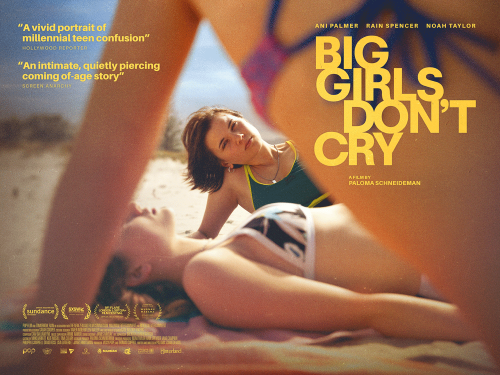
It’s the summer holidays in rural New Zealand, and fourteen-year-old Sid has nothing to fill them. Her father has checked out, and her only window onto a bigger life is a borrowed MSN account. Online and off, she watches the older teens who seem to move through the world so easily, and tries on their attitudes like stolen clothes. What she feels for them is part envy, part something she doesn’t yet have the words for.
Newcomer Ani Palmer gives a fearless lead performance as Sid, alongside Noah Taylor (Peaky Blinders, Almost Famous) and Rain Spencer (Good Girl Jane, The Summer I Turned Pretty). Rich in period detail and unflinching in its honesty, this is a coming-of-age film for anyone who remembers being fourteen, and for anyone still not entirely sure they’ve worked themselves out.
Writer-director Paloma Schneideman drew on her own adolescence for the film. “Somewhere, in some patch of bush in some country, there’s a girl doing something she doesn’t want to do, just to be accepted by people she doesn’t even like,” she says. “The film holds up a mirror to that time, not to moralise, but to acknowledge it: it was messy, confusing, joyful and painful.”
Mentor Jane Campion, reminded Schneideman that Sid needed “an innate charisma, someone you could watch do absolutely nothing and still be fascinating,” and Schneideman found it in Ani Palmer: “About seven seconds into her first tape, I felt it: the stillness, the vulnerability, the unspoken pull.” For Schneideman, the story remains urgent: “We like to believe we’ve reached a moment where speaking openly about these things is effortless, but I know, in my body, that the distance between permission and freedom is still wide.”